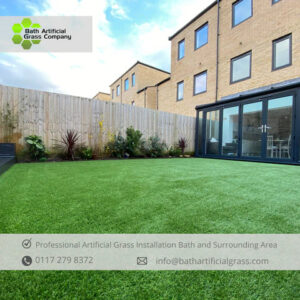
The final standards of any artificial grass installation starts with the quality of the ground preparation beneath the surface, the groundworks will provide drainage and a firm base ready for your artificial lawn to be fitted to.
SOFT SURFACE INSTALLATION
This usually involves removing an existing lawn or gravelled area.
Here’s how we transformed one garden from a patchy, undesirable lawn into a maintenance free space that looks great and can be enjoyed all year round…

OUR INSTALLATION PROCESS EXPLAINED
1). Dig out existing lawn/gravelled area to a depth of 50-125mm
below finished level. This will allow room for aggregates.
2). Install a ground stabilising geotextile weed membrane
to the entire area to prevent any unwanted growth from surfacing.
3). Fill entire area with a coarse type1 aggregate, this will be shaped and compacted forming a firm, flowing and well draining layer.
4). Further fill the area with a blinding of stone
dust/sharp sand, this will be compacted and hand screeded providing a smooth, flowing finish to the base.
5). Fit the chosen artificial grass to the area carefully trimming into all edges around perimeter. Seamless joins will be made where necessary.
6).Finally distribute kiln dried silica sand on top of the grass and brush up mechanically. This adds weight to the grass while adding extra protection to the backing.
HARD SURFACE INSTALLATION
This usually involves fitting artificial grass directly to a timber decking or concrete area.
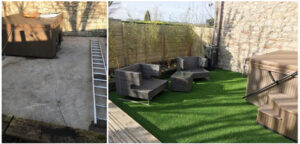
1). Clear the area of any debris and if necessary carry out any repair work needed to the surface.
2). Install the chosen artificial grass to the area
and cut into the edges.
3).Finally distribute kiln dried silica
sand into the area and mechanically brush up the grass.